NEWSLETTER JUNE 2026
A Dutch foundation (Dutch:“Stichting”) is an independent legal entity designed to realize a specific goal, whether charitable, social, or commercial. It has no members or shareholders, making it an "orphan entity" controlled solely by its board. It is ideal for asset protection, wealth preservation and corporate structuring.
Pros
Asset Protection: Because the foundation has no owners, neither the founder nor the beneficiaries have direct entitlement to its assets. This makes foundation assets highly protected against personal creditors or bankruptcy claims.
Separation of Ownership (Dutch: “Stichting Administratiekantoor; STAK”): By utilizing a special foundation type called a STAK (Trust Office Foundation), the legal and economic ownership of its assets can be separated. This allows the STAK to hold shares in a company while consolidating voting control within the foundation board.
Limited Personal Liability: Board members are generally not personally liable for the foundation's debts or obligations, provided there is no mismanagement or gross negligence.
Tax Advantages for Charities: If granted the official ANBI status, the foundation is exempt from gift and inheritance taxes, and donors can deduct their contributions from their personal or corporate income tax. However, the purpose of the Foundation has to be such that contributes to the public interest. This can be a religious denomination for example.
Flexibility for International Families: For non-resident families, a Dutch STAK foundation is a highly flexible alternative to Anglo-Saxon discretionary trusts as an estate planning tool.
Low Administrative Burden: normally foundations don’t have to publish annual statements, file corporate income tax and VAT returns. However, foundations with ANBI status must maintain financial records, file annual reports with the KVK and other documents online on its website such as remuneration policy for its staff.
Cons
Costs to Establish: like associations (Dutch: “verenigingen”) establishing a Stichting legally requires drafting an incorporation deed (Dutch: “statuten”) through a civil-law notary and registering with the trade register of the Dutch Chamber of Commerce. A STAK needs drafting of trustconditions (Dutch: “administratievoorwaarden”) and issuance of depositary of receipts, which causes more costs.
Loss of Direct Control: Because assets are transferred to the foundation, the founder permanently gives up direct personal ownership, relying instead on the board to carry out the foundation's goals. However, there can be a Protector appointed who can fire and appoint the board of the foundation.
Commercial Tax Obligations: If the foundation actively runs a business or engages in commercial activities, it is generally subject to Dutch corporate income tax (Dutch: “vennootschapsbelasting”) and may need to account for VAT and file VAT returns as well.
Capital Lock-in: Once assets are acquired by a charity foundation, they cannot simply be withdrawn or reclaimed by the founder, as the assets should be used according the foundation’s statutory objectives. However, with a STAK the managed assets can be transferred via a notarial deed if allowed for in the deed of incorporation.
If you're considering setting up a Dutch (STAK) foundation, please let us know:
Is your primary goal charitable/philanthropic or commercial/asset protection?
Where are the primary founders, assets and beneficiaries based?
We can assist you with the incorporation of your foundation and provide a registered address and a compliant Dutch resident director.
NEWSLETTER MAY 2026
The EU Inc can be attractive for entrepreneurs with international ambitions within Europe who view the entire continent country as a sales and growth market.
Criticism of the recently presented EU Inc. focuses primarily on legal inequality, susceptibility to fraud, and a lack of added value. Critics doubt whether this truly benefits the complex European business landscape.
The main objections are summarized as follows: Risk of fraud and sham constructions: Due to strong harmonization and the lack of physical supervision at the local level, professional organizations such as the Royal Dutch Notarial Association (KNB) warn that EU Inc. facilitates fraud. It would become easier to circumvent legislation.
In the proposal for an EU Inc., which has a significant impact on citizens, businesses, employees, and the legal system, the KNB sees the following objections:
The EU Inc. leads to the erosion of preventive legal protection, legal equality, and legal certainty, and may therefore also have an adverse effect on the EU's competitive position. The existing system actually provides the EU with a significant competitive advantage over other legal systems. Preventive legal checks and robust identity and integrity verification are crucial elements that distinguish the EU from Anglo-Saxon countries. Dismantling or circumventing these safeguards will weaken the reliability of the business climate in the EU rather than strengthen it. In times of geopolitical instability, the dismantling of the rule of law is a worrying choice. This proposal therefore appears to be a desperate attempt to stimulate price competition, with a counterproductive effect on legal certainty, legal equality, and legal protection.
According to KNB to protect European sovereignty, it is essential that new instruments in corporate law build on the strengths of the existing EU model, rather than weakening them. It is precisely capital providers and investors, who should be encouraged by this Regulation, who seek legal systems that offer stability, predictability, and enforcement of rules. The European framework for preventive checks provides them with exactly this. The lightly regulated EU Inc. carries the risk of creating incentives for circumvention of checks, for sham constructions and fraud, and could weaken confidence in the internal market. It is not the initial incorporation process that hinders innovative startups and scale-ups, but rather the problems in attracting financing, attracting and retaining talented employees, and having a clear framework for scaling up within the EU.
Moreover, KNB argues that establishing a company can be done in a short time.
European company law, as we know it today, has been carefully developed with strong digitalization that ensures a modern and secure environment for a level playing field. Allow this to fully mature first and encourage optimal use of existing (especially digital) possibilities before initiating a new major change. Every new business form should be compatible with the acquis without conflicting standards or lower levels of security and protection. The introduction of a parallel system leads to uncertainty, legal inequality, and confusion among entrepreneurs. And mind you: the EU Inc. is not limited to startups and scale-ups, but is applicable to every entrepreneur.
Finally, KNB states that experience shows that good intentions alone offer insufficient protection. Robust anti-money laundering mechanisms and systems for identity verification, fraud prevention, and supervision are indispensable. This is also evident from the implementation of the AML package. The proposal appears to be a break with the national desire to strengthen the gatekeeper role and the new EU regulations being introduced in 2027. It is precisely because of this gatekeeper role that an entrepreneur knows in advance with whom he is doing business and what the risks are. A parallel system without equivalent controls would expose the internal market to serious risks such as fraud, abuse, and money laundering and will inevitably lead in the long run to a heavier burden on the judiciary, which will have to be deployed to make corrections retrospectively. All this is separate from the high costs this will entail for the entrepreneur according to KNB.
Arcanum is eager to manage this new entity form. An EU inc could match better with the new AML package with an EU regulator.
For our branch the national desire to strengthen the gatekeeper role even more seems a disease. Last year there was only 1% increase in the population of new BV’s which is proof that the present legal systems choke our investment climate. Even under the new EU regulations being introduced in 2027 this causes problems in our economy with banks, and other third parties in their mandatory know your customer due diligence process. This is because the Dutch legislator can still red flag certain groups as high risk even with the implementation of the new EU AML package.
There is no need to redflag certain branches if they are already heavily regulated. However, there is a need to combat the illegal service providers because these don’t act as a gatekeeper at all. This has been neglected by the Dutch Government and Regulators over the years.
Therefore, Arcanum welcomes more real EU harmonization being introduced in the near future because this could lead to less stringent mandatory know your customer due diligence.
Still The Netherlands has attractive tax facilities for tech Start-ups companies and we see several inquiries for incorporation, registered address and management services to new BV’s with owners from abroad. Existing Dutch entity forms are still attractive enough for Ferrari for example to have an N.V. because the rights on the shares can be customized as desired. The Dutch law still contains several corporate pearls if you know how to tune these as desired.
Moreover, with Arcanum on board as Dutch resident co-director your new BV will not hit the wall when for example entering into lease agreements and other provider contracts. The BV will then have tax substance as well.
The EU Inc. is not a replacement for existing legal forms, but an additional option. Entrepreneurs can therefore still choose a Dutch BV or another national legal form.
For many start-ups and SMEs, the Dutch BV remains the most logical choice for the time being, as EU Inc offers limited advantages in the initial phase.
NEWSLETTER APRIL 2026
The EU Inc. will be a new optional corporate legal regime for which the EC has just launched a Proposal (See REGULATION OF THE EUROPEAN PARLIAMENT AND OF THE COUNCIL on THE 28TH REGIME CORPORATE LEGAL FRAMEWORK - 'EU INC.').
Anyone who wishes to set up a new company in the EU will have the choice to either use the new EU Inc. company form or an existing national company form, which will not be affected by the proposal. The new EU Inc. form will be the same in all Member States. In addition, EU entrepreneurs will be free to choose the Member State in which they would like to incorporate.
According to the Proposal the Commission will set up an EU interface for EU Inc. companies to register their company and submit their information. They will only need to submit their relevant information once. This will allow EU Inc. companies to focus on their innovation and business operations. Upon entry into application of the proposal, companies will immediately be able to register and submit their information via an EU-level interface connecting national business registers. The Commission will then establish a new central EU register for all EU companies to register their company information, no matter where they are established in the EU.
Main features of EU inc. include according to Brussel:
faster registration and simpler procedures: founding an EU Inc. company within 48 hours, for less than €100 and with no minimum share capital requirements and by only submitting their company information once, via an EU-level interface;
fully digital operations throughout a company’s life cycle;
helping founders restart faster and cheaper: simplified liquidation procedures, enabling founders to test out innovative ideas and start again if needed;
better conditions to attract investment by removing in-person formalities, providing digital procedures for financing operations, and simplifying the transfer of shares with possibilities to access the stock exchange;
full access to the single market: by freely choosing the EU country in which they incorporate;
strong safeguards against abuse: national employment and social laws are not affected by the proposal. The applicable safeguards of the EU country of registration will apply in full to the EU Inc. company.
Closer examination of the features of the Proposal (among others):
One of the main benefits will be that the income derived from the warrant shall be deemed not to have accrued at the time of grant of the warrant, at vesting, nor when the holder of the warrant exercises his/her right for the acquisition of shares. It shall be deemed to arise and thus be subject to taxation only at the time when the shares obtained by exercising the warrant are disposed of.
The EU Inc. shall be subject to the requirements of the applicable accounting law of the Member State in which its registered office is situated. However, Article 26 of teh Proposal shall apply as regards the filing and public availability of accounting documents of the EU Inc. which provides for among others that the accounting documents for each financial year which are required to be published in accordance with Council Directives 86/635/EEC and 91/674/EEC and Directive 2013/34/EU of the European Parliament and of the Council.
Where digital copies and extracts of documents and information among others about an EU Inc., provided and certified as true copies by a business register are to be presented in another Member State, they shall be exempt from legalization and any similar formality.
The EU Inc. shall be represented by its directors. If the EU Inc. company has several directors, they shall represent the company jointly and shall be referred to as ‘co-directors’ which can be appointed as solely authorized director by the general meeting.
Every EU Inc. shall create upon registration and maintain an up-to-date digital register of registered shares, ensuring the integrity and security of the register which can be useful to prove ownership of shares.
The transfer of shares and the registration of a transfer of shares in the digital register of shares may be concluded fully online. Member States shall not impose any additional formalities, including a requirement for a notarial deed, for the transfer to be legally valid.
Member States shall not prohibit an EU Inc. company from seeking admission to trading of its shares on a multilateral trading facility, provided that the company complies with the applicable requirements under Union and national laws.
A shareholder shall not be liable for the obligations of the EU Inc. However, if acts have been performed in the name of an EU Inc. before its registration in accordance with Articles 16 to 19 of the Proposal and it does not assume the obligations arising out of such acts after its registration, the natural and legal persons which performed those acts shall, without limit, be jointly and severally liable therefor, unless otherwise agreed.
Unless otherwise specified in the articles of association, new shares issued against a consideration in cash or instruments entitling to new shares as referred to in Article 68 of the Proposal shall be offered on a pre-emptive basis to the shareholders in proportion to their shareholding. Shareholders shall have no pre-emptive rights on new shares issued to satisfy claims arising from instruments entitling to new shares.
Upon application by a shareholder of an EU Inc., the competent court shall order the EU Inc. and the other shareholders to acquire that shareholder’s shares if it finds that the company’s affairs are being or have been conducted in a manner oppressive to him or her.
The decision on a (dividend) distribution shall only take effect if the board of directors certifies in a statement signed by all directors that, based on the most recent financial statements and after thoroughly examining the company’s current and future affairs, it has formed the reasonable opinion that following the distribution,
(a) the total amount of assets as set out in the most recent balance sheet would remain greater than the total amount of liabilities and capital (balance sheet test), and
(b) the company will be able to pay its debts as they fall due in the normal course of business in the 12 months following the date of the distribution (solvency test).
If the director(s) or shareholder(s) should have known at the time of the statement that, following the distribution, the total amount of assets of the company would not remain greater than the total amount of liabilities and capital or that the company would no longer be able to pay its debts in the 12 months following the date of distribution, they shall be jointly and severally liable to the company for all damages resulting from the distribution.
Insolvent EU Inc. innovative startups may request the opening of simplified windingup proceedings in accordance with this Chapter.
Given its key importance for the EU's competitiveness, the Commission is calling on the European Parliament and the Council to reach an agreement on the EU Inc. Proposal by the end of 2026.
We will keep you updated as usual.
START UP NEWS JANUARY 2026
Dear Relation,
We herewith kindly inform you with practical insights for growing your BV in The Netherlands.
Starting and scaling a Dutch BV is exciting but also packed with rules, deadlines, and decisions that really matter. This newsletter keeps things simple, relevant, and founder-friendly.
If you are about to incorporate a BV make sure you have at the least handled the essentials:
1. Prior On boarding Know Your Customer due diligence under Dutch AML law.
2. Deed of Incorporation.
3. Registration with Kamer van Koophandel (KvK). Registration fees apply of EUR 85,15:
4. UBO registration completed and up to date.
Arcanum offers an all-in fixed formation fee of EUR 2,500 plus VAT when applicable in standard situations for the above. Notarial fees for the deed and KvK registration fees are included as well.
Optional: Share structure and shareholders agreement.
5. Registered address services: the notary will ask you at the incorporation if the address is provided by a trust office. Arcanum can provide a registered address when desired in combination with management services. Please inquire for your fixed fees.
6. Management: Dutch resident corporate Director (bestuurder), ongoing administrative, KYC due diligence compliance and other legal services. These services can be provided on a fixed fee basis, depending on the type of your company and the amount of transactions. Please inquire for your fixed fees.
Optional: filing a bank account application on behalf of the BV.
7. Bookkeeping and filings of Corporate Income Tax (Vpb), annually, VAT (BTW), monthly or quarterly filings, Payroll taxes filings. These services can be provided on a fixed fee basis, depending on the type of your company and the amount of transactions. Please inquire for your fixed fees (these services are provided by our accounting partner).
Skipping or delaying these can cause issues later especially with the Dutch tax authorities, banks and investors.
Your BV is a limited liability entity: contracts, IP, and income should live inside the company not in your personal name. This protects you.
Funding & Support
Did you know many early-stage BVs qualify for:
• Innovation credits
• Regional development grants
• Tax benefits like the Innovation Box
Even pre-revenue startups can qualify if structured correctly.
The advantage of having your BV hosted by Arcanum, a Dutch trust office which has the required license from the Dutch Central Bank, is that you will have a sustainable Dutch corporate services provider which you pay management fees instead of the full salary for a Dutch resident director.
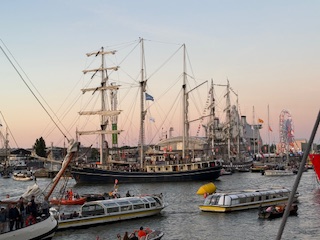
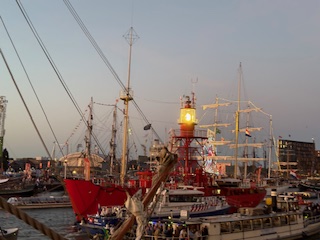
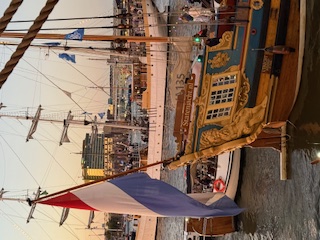
SAIL 2025


Legal Development
FATF
High-Risk Jurisdictions subject to a Call for Action - 13
June 2025
Jurisdictions subject to a FATF call on its members and
other jurisdictions to apply countermeasures:
- Democratic People's Republic of Korea (DPRK)
- Iran
Jurisdiction subject to a FATF call on its members and other
jurisdictions to apply enhanced due diligence measures proportionate to the
risks arising from the jurisdiction:
- Myanmar
EC
10 June 2025: Commission
updates list of high-risk countries to strengthen international fight against
financial crime
A number of third‑country jurisdictions were added
to the list – Algeria, Angola, Côte d’Ivoire, Kenya, Laos, Lebanon,
Monaco, Namibia, Nepal and Venezuela), while other jurisdictions were delisted
(Barbados, Gibraltar, Jamaica, Panama, the Philippines, Senegal, Uganda, and
the United Arab Emirates).
On the list are as per 10 June 2025:
High-risk third country
1 Afghanistan
2 Algeria
3 Angola
4 Burkina Faso
5 Cameroon
6 Côte d’Ivoire
7 Democratic Republic of the Congo
8 Haiti
9 Kenya
10 Laos
11 Lebanon
12 Mali
13 Monaco
14 Mozambique
15 Myanmar
16 Namibia
17 Nepal
18 Nigeria
19 South Africa
20 South Sudan
21 Syria
22 Tanzania
23 Trinidad and Tobago
24 Vanuatu
25 Venezuela
26 Vietnam
27 Yemen
Securitization
NOVEMBER 2024 NEWSLETTER
Arcanum is an official trust office with a license from the Dutch Central Bank and can therefore sustainably provide fiduciary services to
Dutch entities such as BVs and Dutch foundations.
1. registered address in the commercial register, in combination with:
2. director services; and/or
3. other services.
For example Dutch foundations are used in so called Residential Mortgage Backed Securities (RMBS) deals in the Dutch real estate branch to collect the monthly mortgage payments.
Also, Dutch foundations are used as holding entities in the investments funds branch and real estate financing structures originating from Luxembourg and Germany.
Moreover, they are used in healthcare structures, in capital market structures and in other securitization structures originating from the EU member states.
Furthermore, Dutch foundations can be used as personal holding entities and in asset protection structures.
Arcanum can host Dutch foundations for the above purposes among others.
We are a small office and can offer direct, personal and confidential corporate services.
Through www.hd-dutchlawyers.com we offer various other legal services as well.
When the occasion arises please kindly consider our services.
It is a matter of trust.
Please contact Mr. Arnold C Hoegen Dijkhof, LL.M., director of Arcanum for your inquiries and orders.
Legal Development
The Dutch tax blacklist concerning non-cooperative jurisdictions for tax purposes has been updated as per 14 August 2024. Non cooperative are:
American Samoa, Anguilla, Antigua and Barbuda, Fiji, Guam,
Palau, Panama, the Russian Federation, Samoa, Trinidad and Tobago, the US
Virgin Islands and Vanuatu.
See: https://zoek.officielebekendmakingen.nl/stcrt-2024-27709.html
Banking
Protection of account holders by the Dutch Deposit Guarantee
is being expanded
If your bank goes bankrupt, it does not necessarily mean
that you lose all your bank deposits. Most banks fall under the Dutch deposit
guarantee scheme. The maximum compensation is then € 100,000 per account
holder, per bank, if certain conditions are met.
All banks with a Dutch banking license are covered by the
deposit guarantee scheme. This is carried out by De Nederlandsche Bank (DNB).
You can ask your bank whether your bank is covered by the deposit guarantee
scheme. You can also look it up yourself in the Financial Supervision Act (Wft)
register.
Private Limited Company (BV) - Is your company a BV? Then
this has legal personality and your company is protected separately from your
private accounts up to € 100,000.
From September 1st , 2024, the maximum
compensation will be higher in some cases, up to a maximum of €500,000 on top
of the standard maximum compensation of €100,000. For example if:
a one-off payment from a life insurance policy was deposited into your account;
if you received a one-off severance payment just before the bank went bankrupt.
See: www.dnb.nl
FATF removes Turkey from money laundering gray list.
See: www.cnbc.com
Legal development:
According to the Minister of Finance the trust service "acting as a director" (part of the definition of a
trust service) is being tightened to avoid ambiguity and circumvention. In addition, the definition of the domicile service plus additional activities (part b of the definition of
trust service) will be tightened.
See: https://www.parlementairemonitor.nl
Economics:
The Dutch Central Bank says that the upturn in the business cycle of the Dutch economy indicates that the recovery phase in the Dutch economy has commenced which is good news.
See: https://www.dnb.nl/en/general-news/dnbulletin-2024/turnaround-in-the-economy/
Legal development:
Taxation: Bahamas, Belize, Seychelles and Turks and Caicos Islands removed from the EU list of non-cooperative jurisdictions for tax purposes as per 20 February 2024.
See: https://www.consilium.europa.eu/en/press/press-releases/2024/02/20/taxation-bahamas-belize-seychelles-and-turks-and-caicos-islands-removed-from-the-eu-list-of-non-cooperative-jurisdictions-for-tax-purposes/
EC High Risk Third Country list updated as per 12 December 2023.
See: https://finance.ec.europa.eu/financial-crime/high-risk-third-countries-and-international-context-content-anti-money-laundering-and-countering_en
New bill: every statutory director who is a director of more than one Dutch legal entity will soon need a Wtt 2018 trust license.
See: http://complianceplatformtrust.com/2023/10/06/vergunningplicht-bestuurder/
Arcanum has the required trust license. Feel free to contact us in order to discuss your situation and a possible solution.
---
Foreign multinational corporations are already well known to play a sizable role in the Dutch
economy. These corporations are mostly part of the non-financial corporations sector as
recorded in the sector accounts framework. Due to the large size of foreign multinational
corporations the Netherlands faces clear challenges to estimate gross national income
accurately. As income received by foreign corporations is to be allocated to the foreign owners,
consistency through the accounts from supply and use tables data to sector accounts data is
important.
The Netherlands has been receiving questions regarding the causes behind the large current
account surplus where non-financial corporations play a significant role as well as questions
regarding the risks related to the large debt levels the Dutch non-financial corporations have
relative to gross national product. For statistical purposes, administrative purposes and
interpretation purposes it is therefore important to split the non-financial corporations sector
into subsectors to enhance the usability of the sector accounts data. Source: Non-Financial Corporations Split Into
Subsectors by Ronald Nelisse, CBS.
Read further:
https://www.cbs.nl/-/media/_pdf/2022/38/report-subsectoring-nfcs.pdf
Herewith the link to the Credit Suisse Global Welath Report 2022
https://www.credit-suisse.com/media/assets/corporate/docs/about-us/research/publications/global-wealth-report-2022-en.pdf
Herewith a link to the Credit Suisse Global Wealth Report 2019
https://www.credit-suisse.com/media/assets/corporate/docs/about-us/research/publications/global-wealth-report-2019-en.pdf
Company Formation Firm of the Year!
On behalf of the Selection Committee of the Leaders in Law - 2020 Global Awards, I am delighted to congratulate you on being the chosen winner for: Company Formation Firm of the Year in Netherlands.
We are proud to have had thousands of nominations, based on acknowledgements made by individuals working in legal and financial firms, the in-house counsel, and visitors of the Leaders in Law website (Leaders in Law). The merits of the nominees were carefully considered for each category of practices and regions worldwide. Your firm, along with the other recipients, stood out in demonstrating leading excellence of the highest standards.
___________________________________________________________________________________________________________________________________________________________________________________________________________________________________________________________________
Published 10 October 2019
To read the article please follow the link below
The Netherlands first in Europe on the World Economic Forum competition list
By Ms. R. Ali, LL.B.
Published 28 August 2019
To read the article please follow the link below
Doing Business in The Netherlands by Arcanum Management
By Mr. Arnold C. Hoegen Dijkhof
Published 30 January 2018
The successful use of Dutch and Liechtenstein Foundations
Last Saturday, 27 January 2018, was the day that Ingvar Kamprad, founder of IKEA, died at the age of 91 years.
Mr Kamprad was a genius and built an impressive business.
How was this business structured, basically speaking ? He worked with a Dutch and with a Liechtenstein foundation.
Herein below the structure is shown, in an inversed way. The Dutch and the Liechtenstein foundations are on top.
Stichting INGKA Foundation
The moral of this story is that the Dutch foundation is unbeatable.
For more information on the Dutch foundation, we refer you to our website and if you have any questions about how to set up the foundation, and how to domicile, manage and administrate it and against which costs, our director Mr Arnold C. Hoegen Dijkhof, ac@arcanum.amsterdam, will gladly answer these questions.
Published 9 November 2017
To read the article please follow the link below
AMSTERDAM IN TOP 10 MOST POPULAR REAL ESTATE CITIES
Published 27 November 2015
To read the article please follow the link below.
DUTCH FOUNDATION ARTICLE WITH FAQ
You can also read the article in the following languages:
CHINESE
HINDI
by Dr. Hans J. Hoegen Dijkhof
Published 6 August 2015
To read the article please follow the link below
THE DUTCH NOTION OF INSTITUTION FOR THE GENERAL BENEFIT (ANBI)
by Mr. Arnold C. Hoegen Dijkhof, LL.M.
by Dr Hans J. Hoegen Dijkhof
by dr. Hans J. Hoegen Dijkhof
by dr. Hans J. Hoegen Dijkhof